Free printable
Fall Pies Recipe Cards
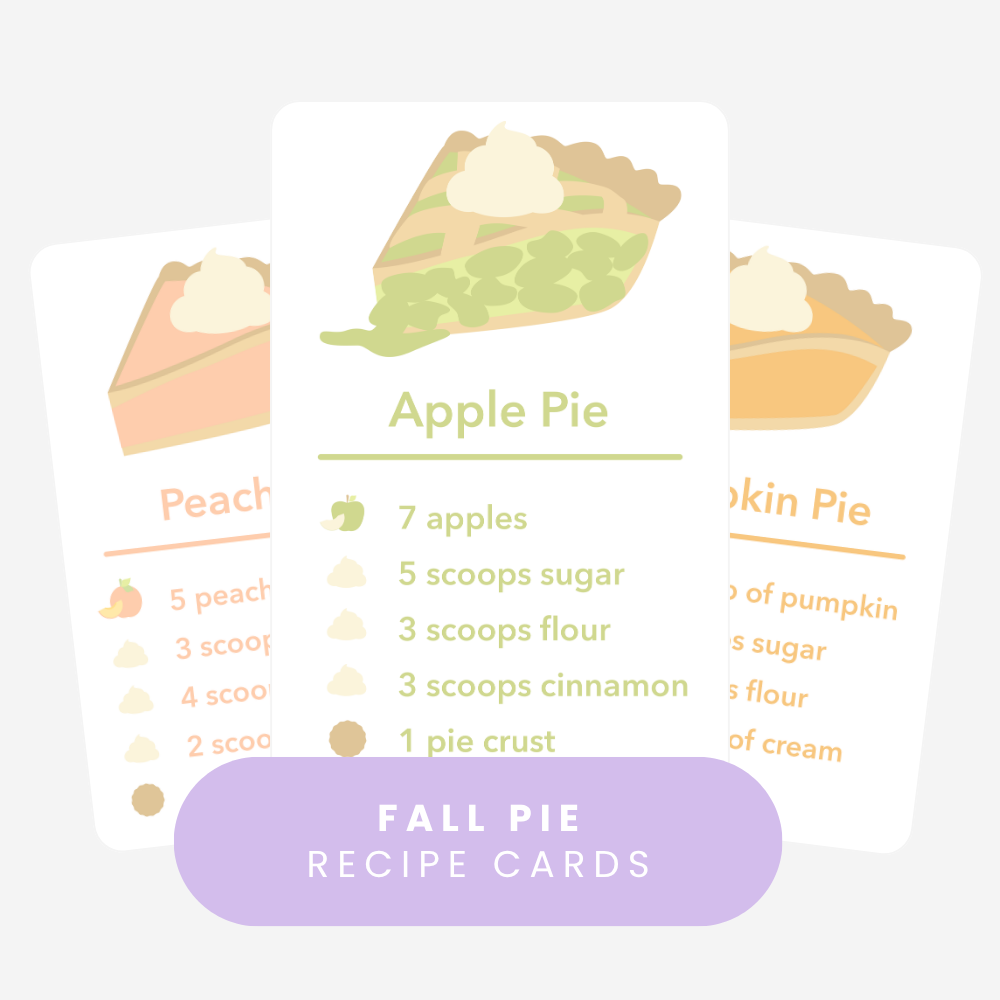
Keep the bakery open with free visual Fall Pie Recipe Cards designed for scooping, counting, sequencing, and pretend baking.
Get the printable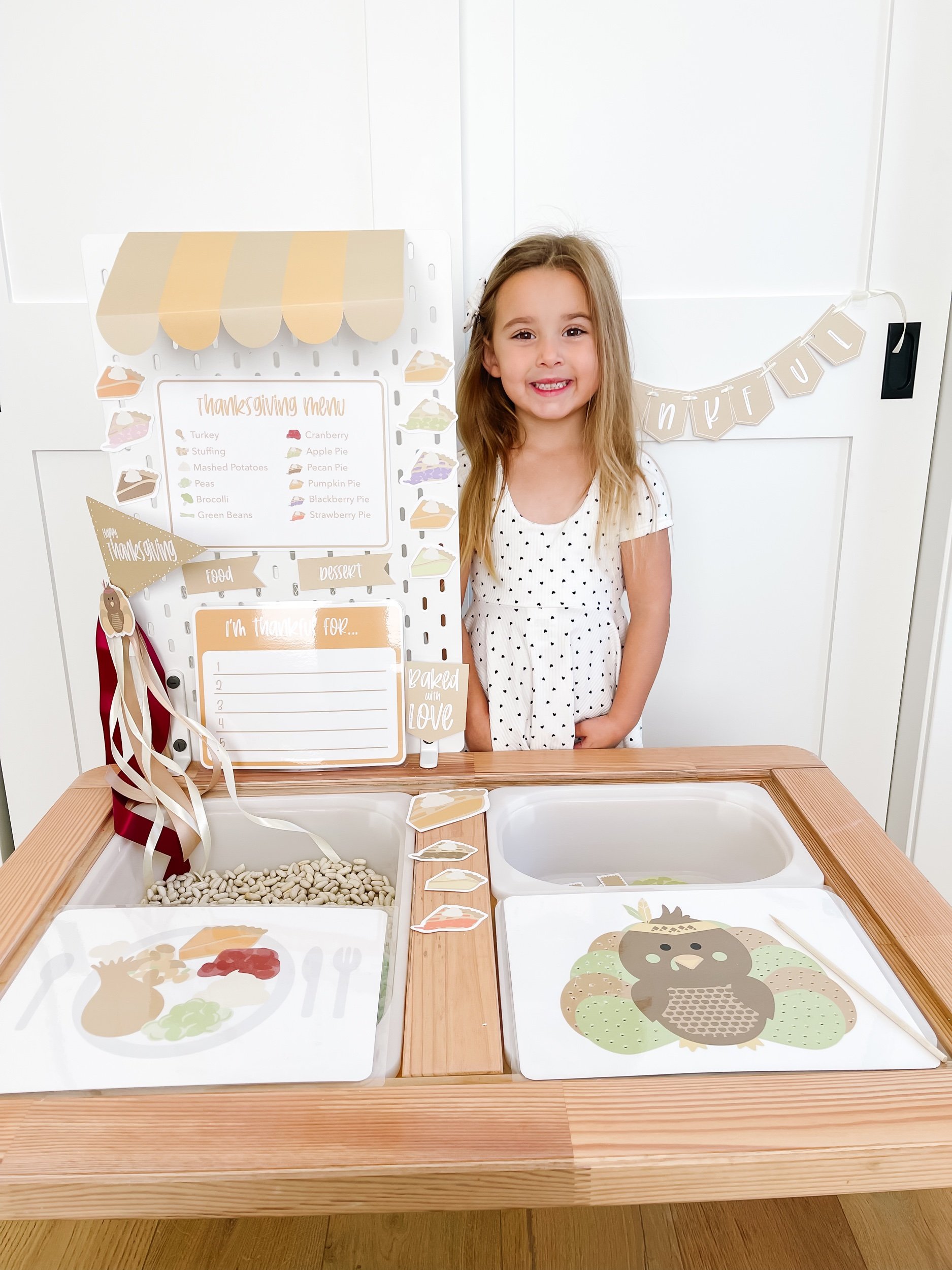

Add pretend pie making to your Thanksgiving sensory table with a simple activity preschoolers can build again and again. Children can assemble printable pie pieces by matching crusts and fillings, or use play dough and sensory materials to sculpt their own Thanksgiving desserts. There is no recipe they have to get right. The fun is in choosing a flavor, building the layers, decorating the top, serving the finished pie, and starting all over again.
Every angle, before you read a single instruction.
Add pretend pie making to your Thanksgiving sensory table with a simple activity preschoolers can build again and again. Children can assemble printable pie pieces by matching crusts and fillings, or use play dough and sensory materials to sculpt their own Thanksgiving desserts. There is no recipe they have to get right. The fun is in choosing a flavor, building the layers, decorating the top, serving the finished pie, and starting all over again.
Keep the bakery open with free visual Fall Pie Recipe Cards designed for scooping, counting, sequencing, and pretend baking.
Get the printableEverything for this setup, in one list.
printable pie crust pieces · printable fillings · printable toppings · tray or sensory table · optional pie tin · optional serving utensils
play dough · pie tin or shallow container · rolling tool · child-appropriate pretend toppings or sensory materials · scoop or spoon · tray
Follow along at your own pace.
Ask your child what kind of pie they want to make. Pumpkin? Apple? Something completely invented?
Choose a printable crust or shape play dough into a pretend pie shell.
Choose a filling and add it to the crust. Talk about colors, textures, flavors, and favorite Thanksgiving desserts as you play.
Add a top crust, pretend whipped cream, shapes, or another decoration.
Pretend to slice and serve the finished pie to family members, dolls, stuffed animals, or guests at the Thanksgiving sensory table. Then take it apart and make another.
Pressing, shaping, arranging, scooping, and moving pieces develops hand control.
Printable crusts, fillings, and toppings can become a simple matching and assembly activity.
Children explore the order of building a pie: crust, filling, topping, serve.
Talk about Thanksgiving foods, flavors, textures, colors, and family traditions.
Children practice familiar routines such as baking, serving, sharing, and hosting.
There is no required finished pie. Children can invent combinations and designs of their own.
What kind of pie are you making?
What goes on the bottom?
What should we add next?
What color is your filling?
How will you decorate the top?
Who gets the first slice?
How many slices should we make?
What pie would you make for Thanksgiving?
Can you invent a brand-new pie flavor?
Same setup, different challenge.
Set out printable crusts, fillings, and toppings. Let children choose a crust, match it with a filling, add the top, and create their own pretend Thanksgiving dessert. Take the pie apart and build another combination.
Use play dough as the crust and invite children to press, roll, shape, and decorate their own pretend pie. Add appropriate sensory materials or pretend toppings to create different flavors and textures.
Pair the pie with the existing Thanksgiving sensory-play activity and create a full pretend feast.
Make several pretend pies and let stuffed animals or family members place orders.
Count toppings or pretend slices.
While serving the pretend pie, have each person name something that made them happy or something they appreciate.
Make two different pies and compare their colors, fillings, toppings, and number of pieces.