KEEP THE WINTER PLAY GOING
Get the Free Winter Recipe Cards
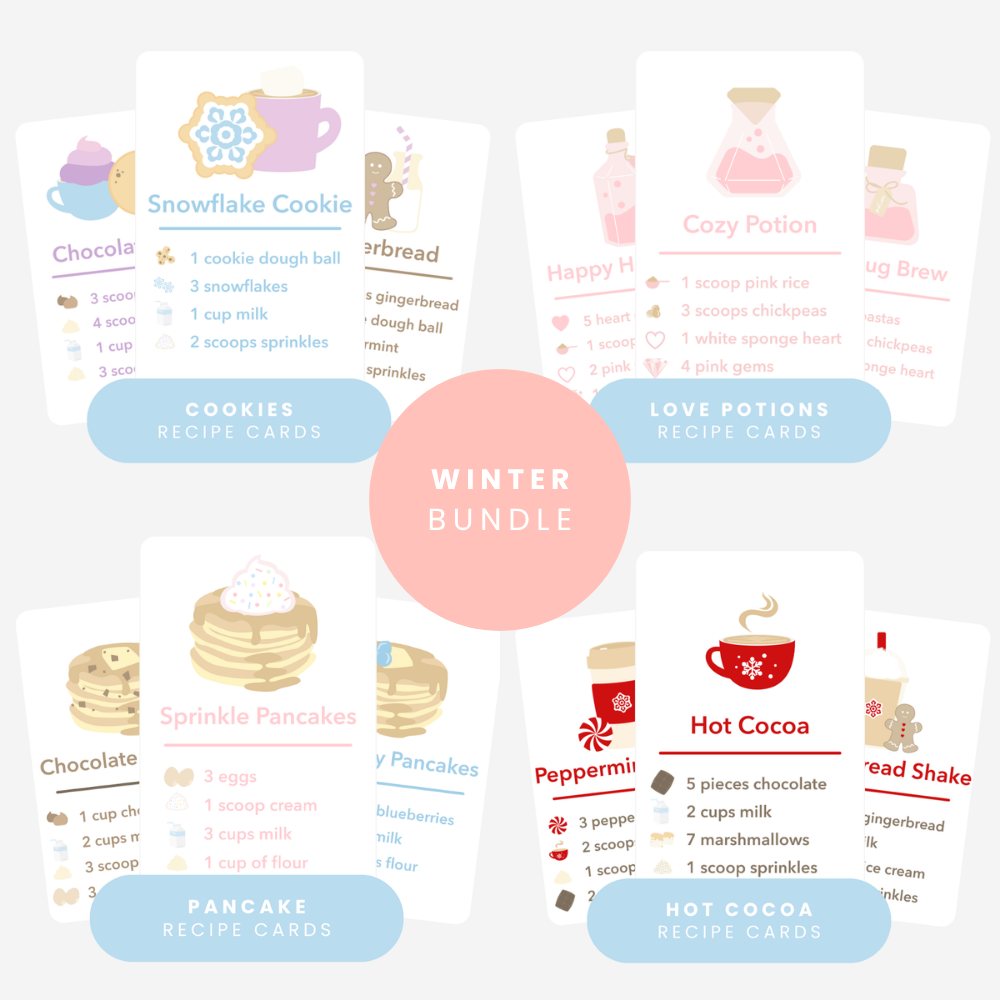
Add another easy hands-on winter activity to your week with printable visual recipe cards designed for playful scooping, measuring and creating.
Get the Free Winter Recipe Cards
Build a tiny frozen snowman, then watch science take over.
Build a tiny frozen snowman, then watch science take over. In this simple winter STEM activity, preschoolers use warm water and droppers to investigate how ice changes as their snowman slowly melts. The playful setup turns temperature, cause and effect, prediction, and states of matter into something children can see and control one drop at a time.
Add another easy hands-on winter activity to your week with printable visual recipe cards designed for playful scooping, measuring and creating.
Get the Free Winter Recipe CardsFollow along at your own pace.
Prepare the snowman ice form ahead of time using the existing source setup.
Let children observe and touch the frozen snowman and describe what they notice.
Ask what they think will happen when warm water touches the ice.
Use droppers or pipettes to add warm, not hot, water a little at a time.
Notice dripping, shrinking, cracking, puddles, and other visible changes.
Talk about how solid ice becomes liquid water as the snowman melts.
Solid → liquid
Temperature and melting
Warm water causes visible changes to the ice.
Prediction and observation
Fine-motor control with droppers
Early science vocabulary
How does the frozen snowman feel?
What do you predict will happen when we add warm water?
Where is the snowman melting fastest?
What changes can you see?
Is the ice still a solid after it melts?
Where did the melted snowman go?
What might happen if we use cooler water?
How many drops does it take to melt one small section?
Same setup, different challenge.
Count drops before checking for changes.
Compare warm versus cooler water with adult supervision.
Time how long different parts take to melt.
Make a second smaller or larger frozen shape and compare melting speed.
Draw or verbally sequence solid → melting → liquid.