FREE WINTER PLAY
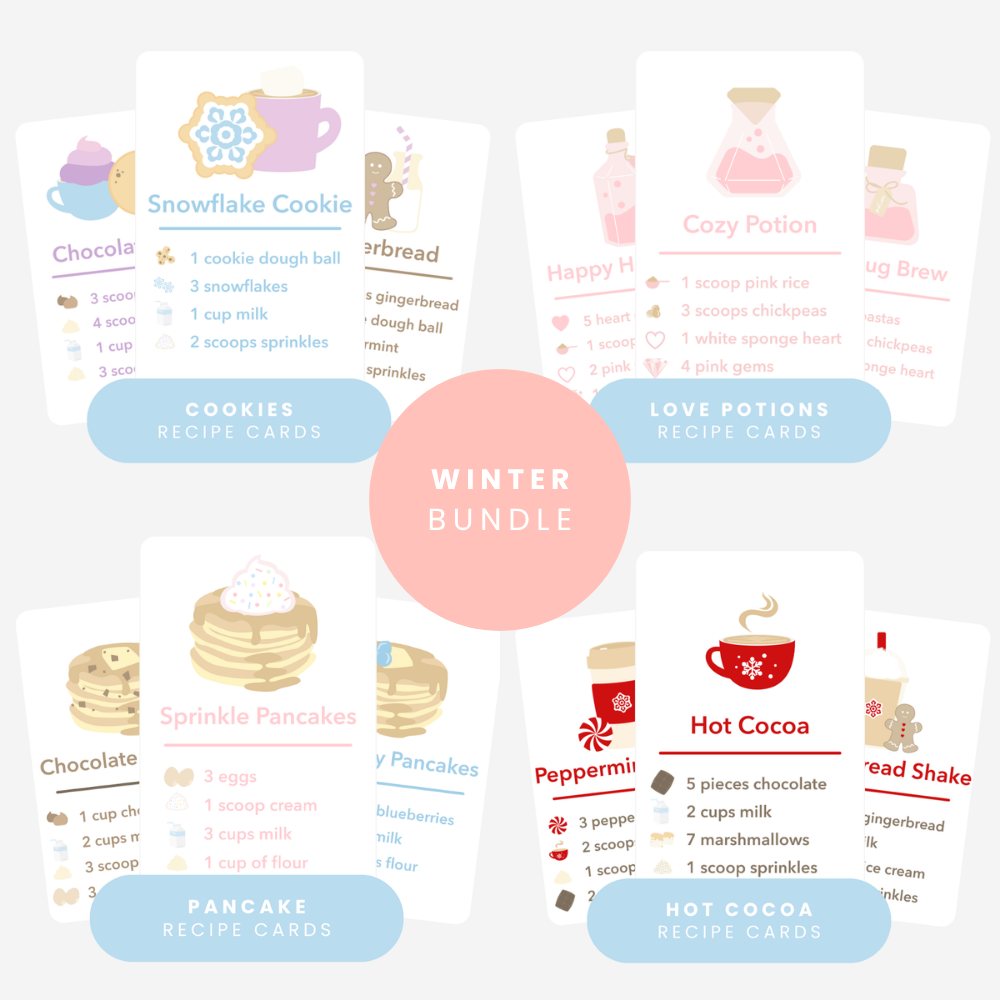
Get the Free Winter Recipe Cards
Keep winter sensory play going with visual recipes designed for hands-on scooping, counting, and pretend play.
Get the Free Winter Recipe Cards
Some Arctic animals are trapped in the ice—and your little scientist has a rescue mission.
Some Arctic animals are trapped in the ice—and your little scientist has a rescue mission. Freeze child-appropriate polar animal figures in ice, then give children warm water and droppers to slowly melt, investigate, and free them. What feels like a rescue game becomes a simple preschool science experiment exploring ice, temperature, melting, cause and effect, and states of matter.
Keep winter sensory play going with visual recipes designed for hands-on scooping, counting, and pretend play.
Get the Free Winter Recipe CardsEverything for this setup, in one list.
Follow along at your own pace.
Let children look closely at the frozen animals. Ask: What do you notice? Can you see the animal? How does the ice feel?
Ask how they think they can free the animal. What might make the ice change?
Use a dropper to squeeze warm water onto the ice. Watch what happens.
Continue adding water to different areas. Observe cracks, holes, melting edges, and liquid water forming around the animal.
Once the ice has melted enough, gently remove the animal. Then rescue the next one.
Observe how temperature affects ice.
Introduce solid ice changing into liquid water.
Warm water causes visible changes to the frozen ice.
Children can guess what will happen before adding water.
Look for cracks, holes, shrinking ice, and water.
Squeezing droppers strengthens small hand muscles and coordination.
Introduce words such as: Arctic polar ice freeze frozen melt solid liquid temperature rescue
How does the ice feel?
What do you think will melt it?
What happens when the warm water touches the ice?
Where is the ice melting fastest?
What is happening to the solid ice?
Where did the melted ice go?
Which animal will be rescued first?
What animals live in cold habitats?
What would happen if we used cold water instead?
Same setup, different challenge.
Count how many squeezes it takes to create a hole in the ice.
Freeze animals in different-sized pieces and predict which will melt first.
After the rescue, sort or identify the Arctic animals.
Use the rescued animals for small-world play.
With adult supervision, compare what happens when cool versus warm water touches ice.
Talk about the ice changing from solid to liquid.