KEEP THE SPACE PLAY GOING
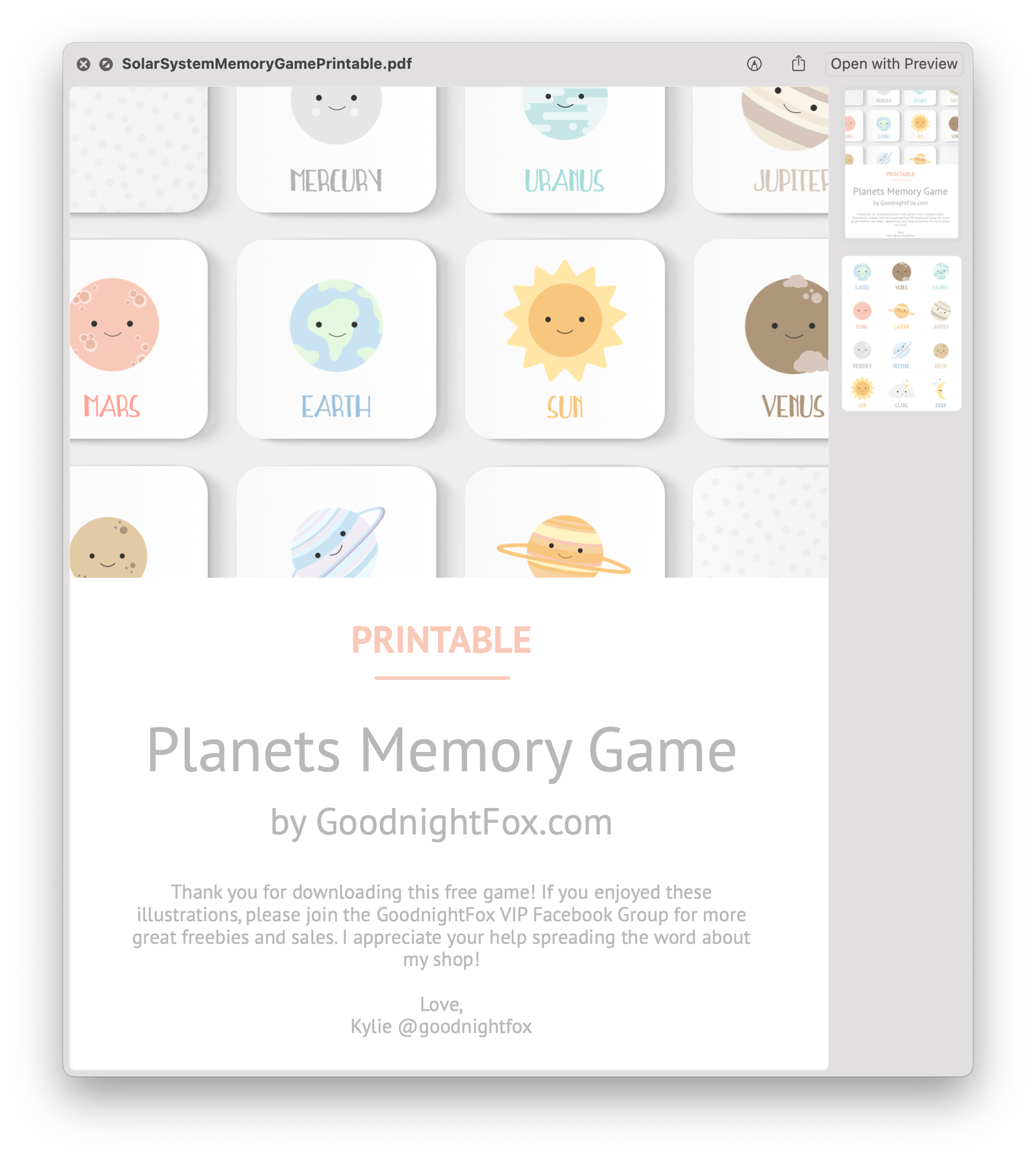
Get the Free Planets Memory Game
Free printable Planets Memory Game — match the smiling planets and keep the solar system learning going after the paint dries.
Get the Free Planets Memory Game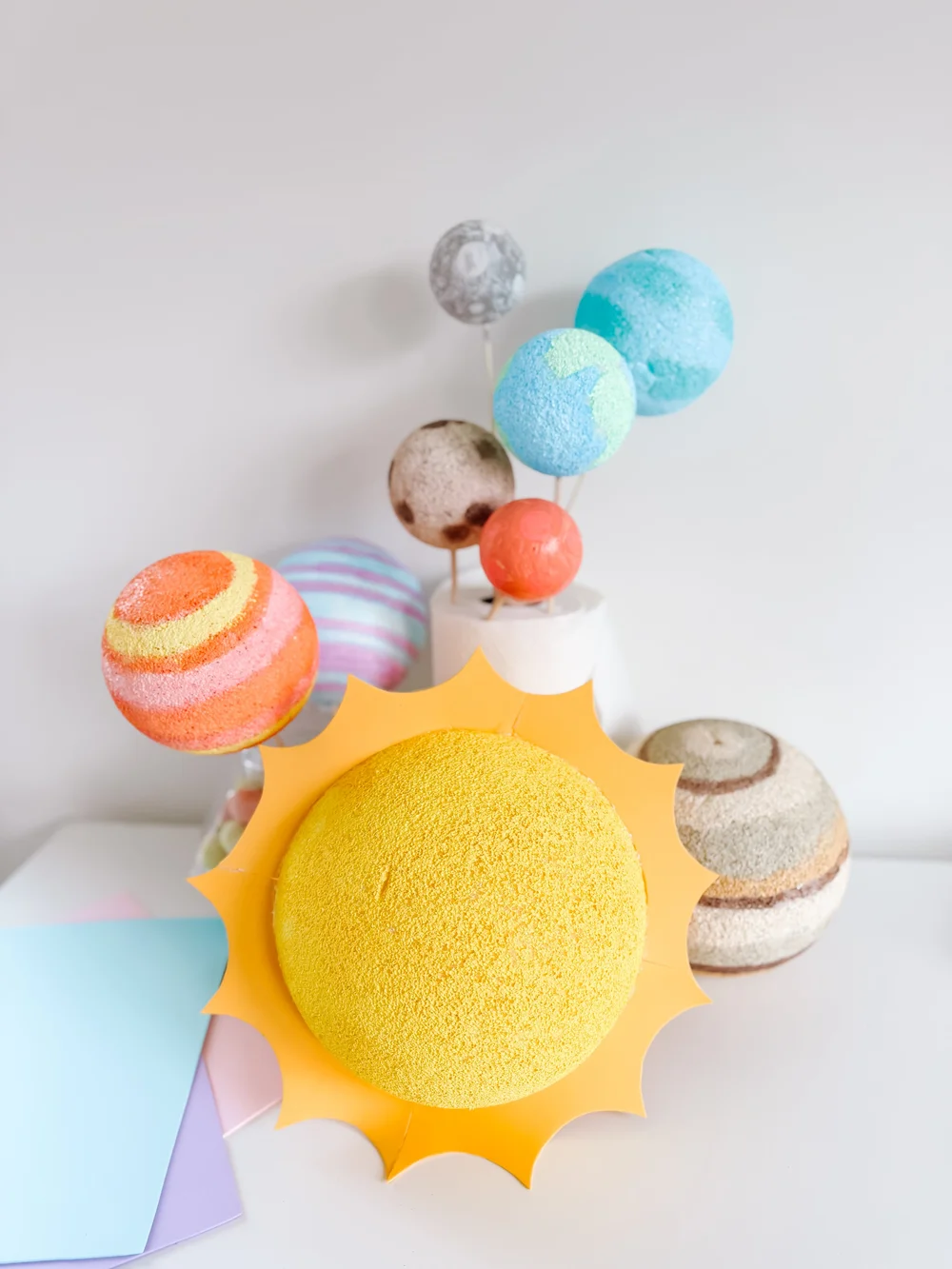
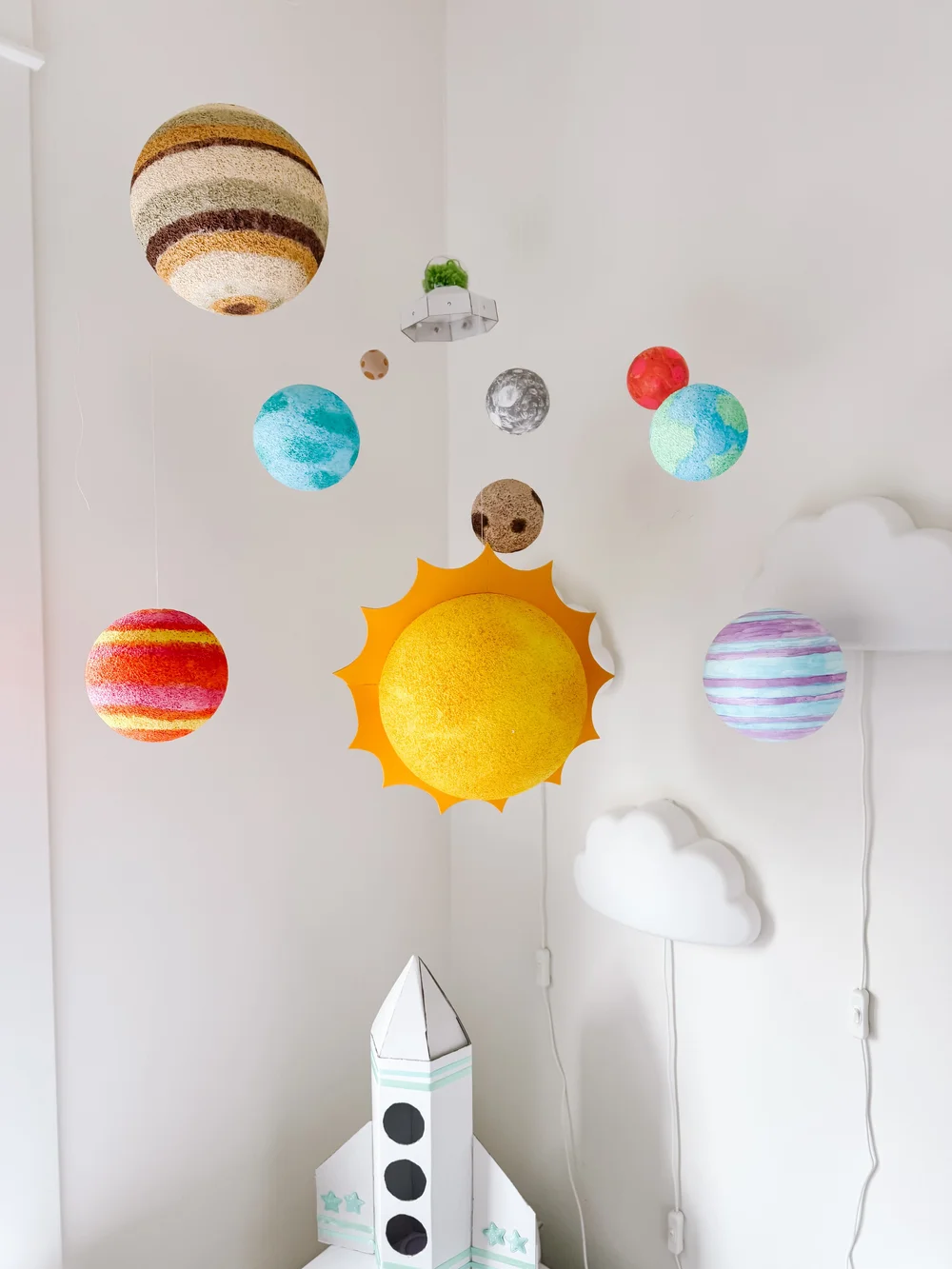
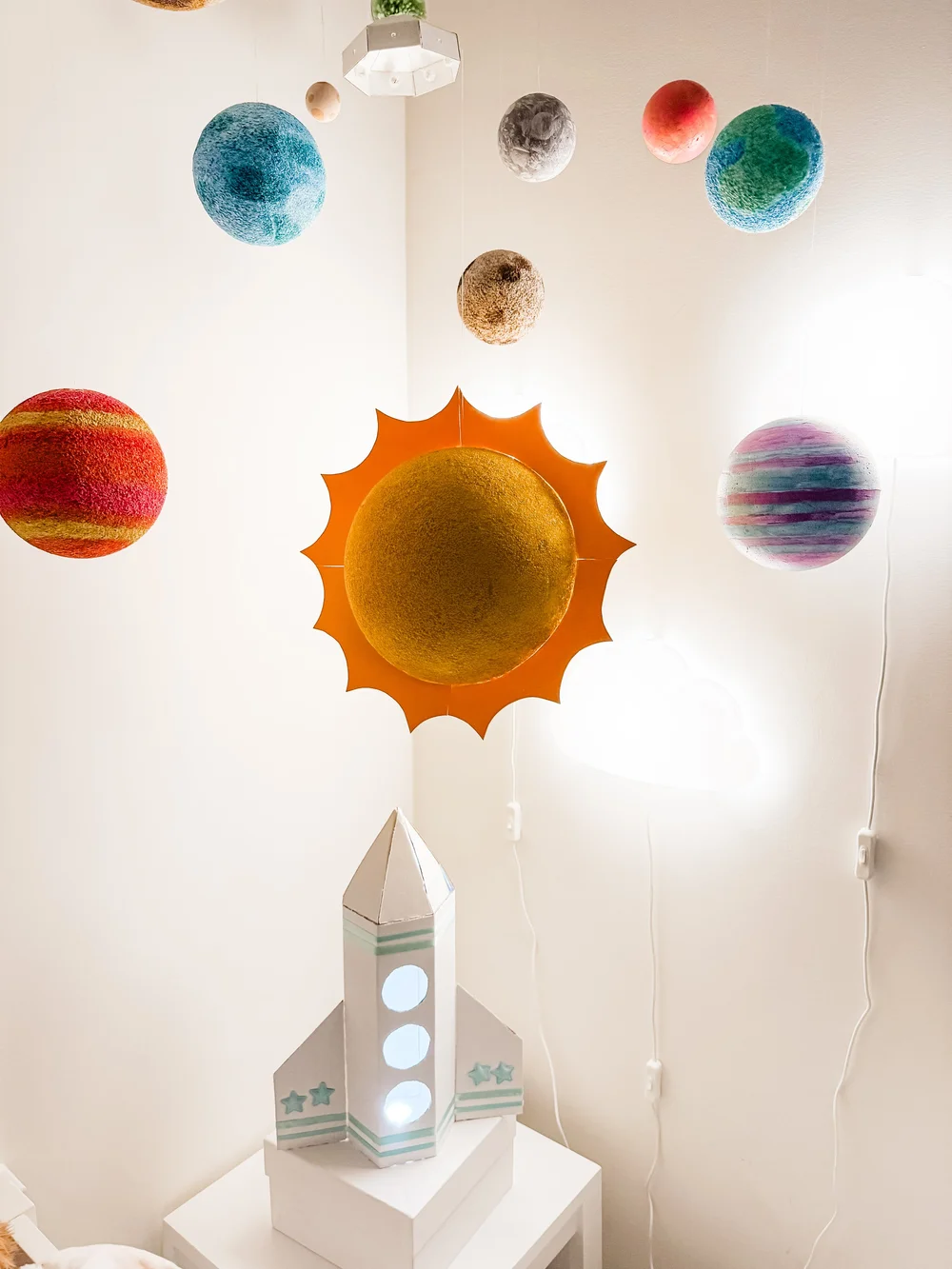
Every angle, before you read a single instruction.
Turn foam balls, pastel paint, and foam sheets into a glowing solar system your little one can hang, display, or play with. Kids paint each planet to match the real one — yellow sun, blue-green Earth, ringed Saturn — then add glow-in-the-dark paint so it shines after dark. Everything here comes from Kylie's DIY Solar System Craft post, built for toddlers and preschoolers.
Free printable Planets Memory Game — match the smiling planets and keep the solar system learning going after the paint dries.
Get the Free Planets Memory GameThe exact products we used, if you'd rather not hunt them down.


Some links are affiliate links. We only share things we actually use.
Follow along at your own pace.
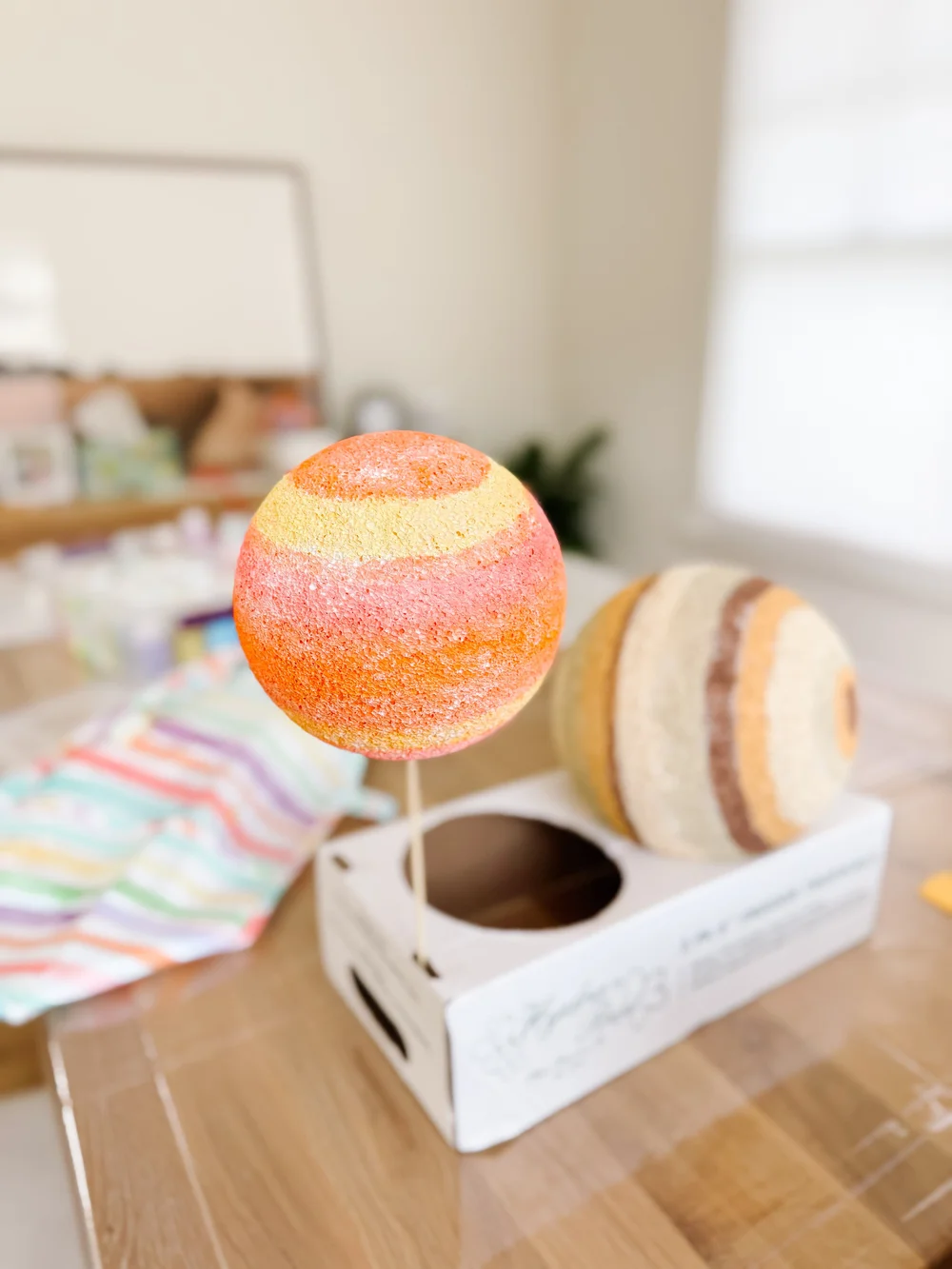
Choose foam balls of different sizes to represent each planet — the Sun should be the largest, Jupiter and Saturn slightly smaller, and Mercury the smallest. Insert a wooden rod into each foam ball; holding the rod makes painting easier without getting paint all over little hands.
Paint each foam ball to match its planet in pastel colors: Sun pastel yellow, Mercury gray with a textured sponge-brush surface, Venus light yellow with orange and white swirls, Earth blue and green swirls for continents and oceans, Mars soft reddish-pink with white speckles, Jupiter light brown and pinkish swirls with its Great Red Spot, Saturn soft golden hues, Uranus light pastel blue-green, Neptune deep pastel blue with hints of purple. Add glow-in-the-dark paint on each planet's surface so they shine in the dark.
Cut thin rings from pastel-colored foam sheets for Saturn and Jupiter and glue them around each planet. For the Sun, cut small triangle rays from pastel yellow foam and attach them around its surface.
Once dry, display your planets by attaching them to a mobile hanger for a space-themed nursery, gluing them onto a black foam board for an interactive space poster, arranging them inside a sensory bin with black beans or kinetic sand, or hanging them as room decor with clear fishing line string.
Matching each foam ball to its planet — sizes, colors, rings, and order — gives toddlers and preschoolers a first, hands-on model of the solar system.
Painting with brushes and sponge brushes, cutting foam-sheet rings and sun rays, and assembling the planets builds hand strength and coordination.
Foam balls, textured paint, and the glow-in-the-dark finish give children colors and textures to touch, look at, and explore in the dark.
Planet names, colors, and words like orbit, glow, and rocket give children real space words to use while they play.
A solar system they built themselves sparks questions about space — and the planets memory game below keeps the learning going.
Which planet is the biggest? Which is the smallest?
What color should we paint Earth? Why blue and green?
Can you find Saturn's rings?
What happens when we turn the lights off?
Which planet is your favorite?
Some links are affiliate links. We only share books we actually read.
Same setup, different challenge.
From the post's display options: tie each planet to a mobile hanger with clear string and hang it over the play table or bed — the planets spin gently and the glow paint shines at night.
From the post's display options: glue the finished planets onto a black foam board for an interactive space poster children can point to while naming each planet.
From the post's display options: arrange the planets inside a sensory bin with black beans or kinetic sand for space play — children can dig, scoop, and land the planets on their own little moons.
From the post: pair the craft with Goodnight Fox's Planet Flashcards — pastel illustrations and fun facts for each planet — to keep the learning going after the paint dries.