KEEP THE WINTER PLAY GOING
Get the Free Winter Recipe Cards
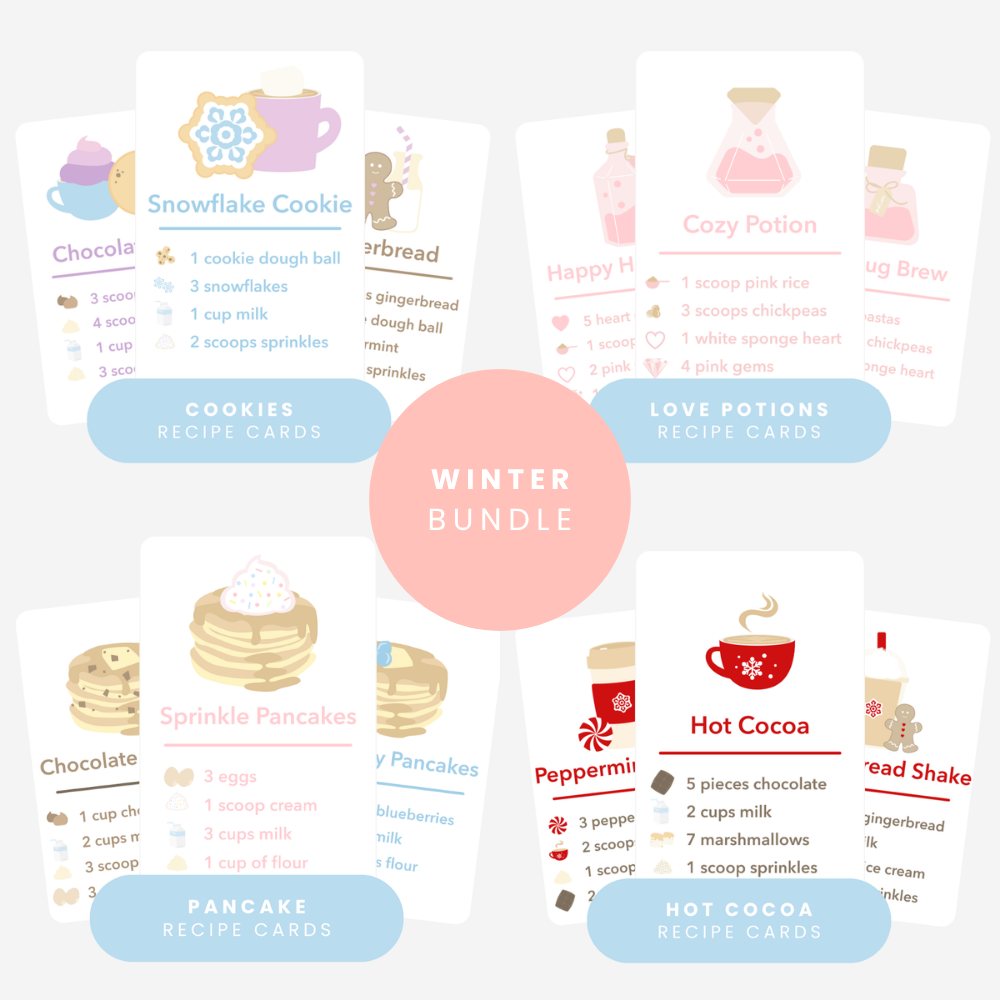
Add another easy hands-on winter activity to your week with printable visual recipe cards designed for playful scooping, measuring and creating.
Get the Free Winter Recipe Cards


Every angle, before you read a single instruction.
When winter keeps everyone indoors, the ice comes inside instead: a tray of blue snowflakes frozen in a snowflake mold, a few drops of food coloring in each one, and the arctic animals out on the ice. Each snowflake freezes a different shade of blue — one drop, then two — so the whole bin is a color lesson before anyone even starts playing. The animals slip and slide, the ice melts under small hands, and a rainy winter afternoon turns into an arctic adventure on the kitchen floor.
Add another easy hands-on winter activity to your week with printable visual recipe cards designed for playful scooping, measuring and creating.
Get the Free Winter Recipe CardsFollow along at your own pace.
Fill the snowflake mold with water and add blue food coloring — one drop in the first snowflake, two in the next, and so on. Each one freezes a different shade of blue. Freeze overnight.
Put the frozen snowflakes in the sensory bin and set it on a tray. Keep towels close and a bucket nearby — anything with water and ice melts, and the melt water needs somewhere to go.
Set the arctic animal figures out on the ice. Let your child decide who goes where — the polar bear on the biggest snowflake, the penguins huddled together.
Let the animals slip and slide across the ice. Dig the snowflakes out, pour a little blue water over them, and talk about the colors as you go — which snowflake is the darkest blue, which is the lightest?
When the play winds down, lift the animals out and tip the melt water into the bucket. Towels handle the floor; the tray catches the rest.
One drop of food coloring, then two, then three — each snowflake a darker blue. Lining them up lightest to darkest is color learning you can hold.
Picking up slippery ice snowflakes and small animal figures builds grip, control, and patience — the ice does not stay still.
Cold, wet, slippery, smooth — the ice bin is a full sensory experience, and the melt gives children a reason to keep touching it.
Words like ice, snowflake, freeze, melt, cold, arctic, and shade grow naturally while the animals play on the ice.
Sending the arctic animals out on the ice turns a tray of frozen water into a whole arctic adventure.
Which snowflake is the darkest blue?
How does the ice feel on your hands?
Where should the polar bear go?
What happens to the ice while we play?
Can you find the lightest snowflake?
Same setup, different challenge.
Line the frozen snowflakes up from lightest to darkest blue and count them in order — the color lesson from the freezing step, made into a game.
Keep a small cup of blue water beside the bin and let your child pour it over the ice. The water runs, the ice shifts, and the bin keeps changing.
Rainy and yucky outside is exactly when this bin earns its keep — everything happens on a tray indoors, and the melt stays in the bucket.