Primary & Secondary Color Mixing Activity
Turn red, yellow, and blue water into an easy preschool science experiment that teaches children how primary colors combine to make secondary colors. Kids pour colored water together, make predictions, and watch new colors appear in real time. The setup is simple, visually engaging, and naturally supports early science, color recognition, fine-motor skills, and cause-and-effect learning.
- Mess: —
- Science
- Prep
- 5–10 minutes
- Play
- 15–30 minutes
- Age
- Preschool with adult supervision
- Activity type
- Color science / STEM / pouring activity
- Mess
- Low to medium
Primary & Secondary Color Mixing Activity up close
Every angle, before you read a single instruction.
Primary & Secondary Color Mixing Activity
Turn red, yellow, and blue water into an easy preschool science experiment that teaches children how primary colors combine to make secondary colors. Kids pour colored water together, make predictions, and watch new colors appear in real time. The setup is simple, visually engaging, and naturally supports early science, color recognition, fine-motor skills, and cause-and-effect learning.
Gather these first
Everything for this setup, in one list.
clear cups, jars, or beakers
water
red food coloring
yellow food coloring
blue food coloring
empty mixing cup or beaker
tray or sensory bin to catch spills
optional pipettes or droppers
Shop the materials
The exact products we used, if you'd rather not hunt them down.
Food Coloring
View on Amazon
Some links are affiliate links. We only share things we actually use.
How to set up primary & secondary color mixing activity
Follow along at your own pace.
Step 1: Introduce the primary colors
Show the red, yellow, and blue water. Ask children to name each color. Explain that these are primary colors and that they can be mixed together to create new colors.
Step 2: Predict what will happen
Choose two primary colors. Before pouring, ask what color they think the mixture will become.
Step 3: Mix red and yellow
Pour some red water and yellow water into the empty container. Observe the new orange color.
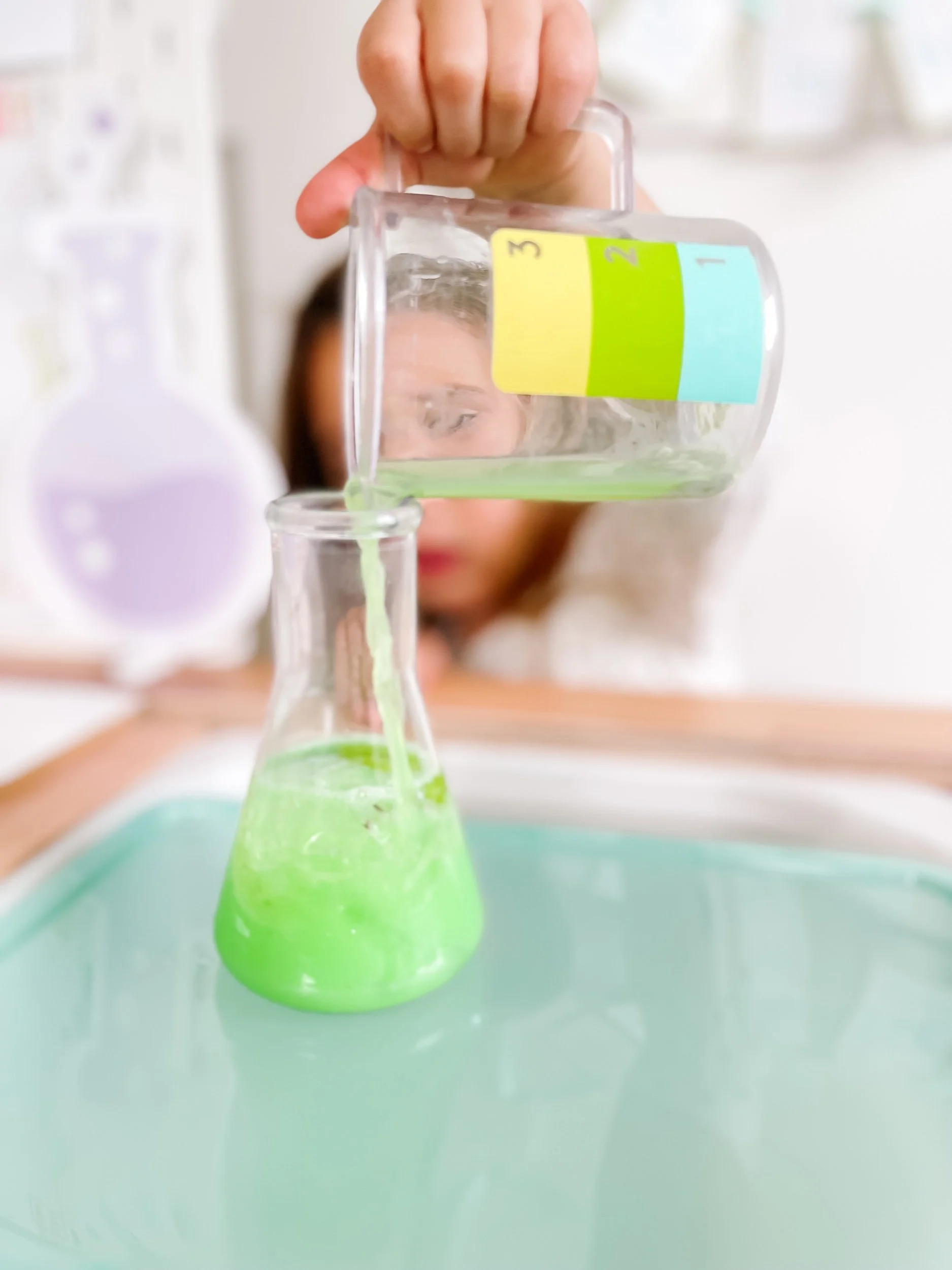
Step 4: Mix blue and yellow
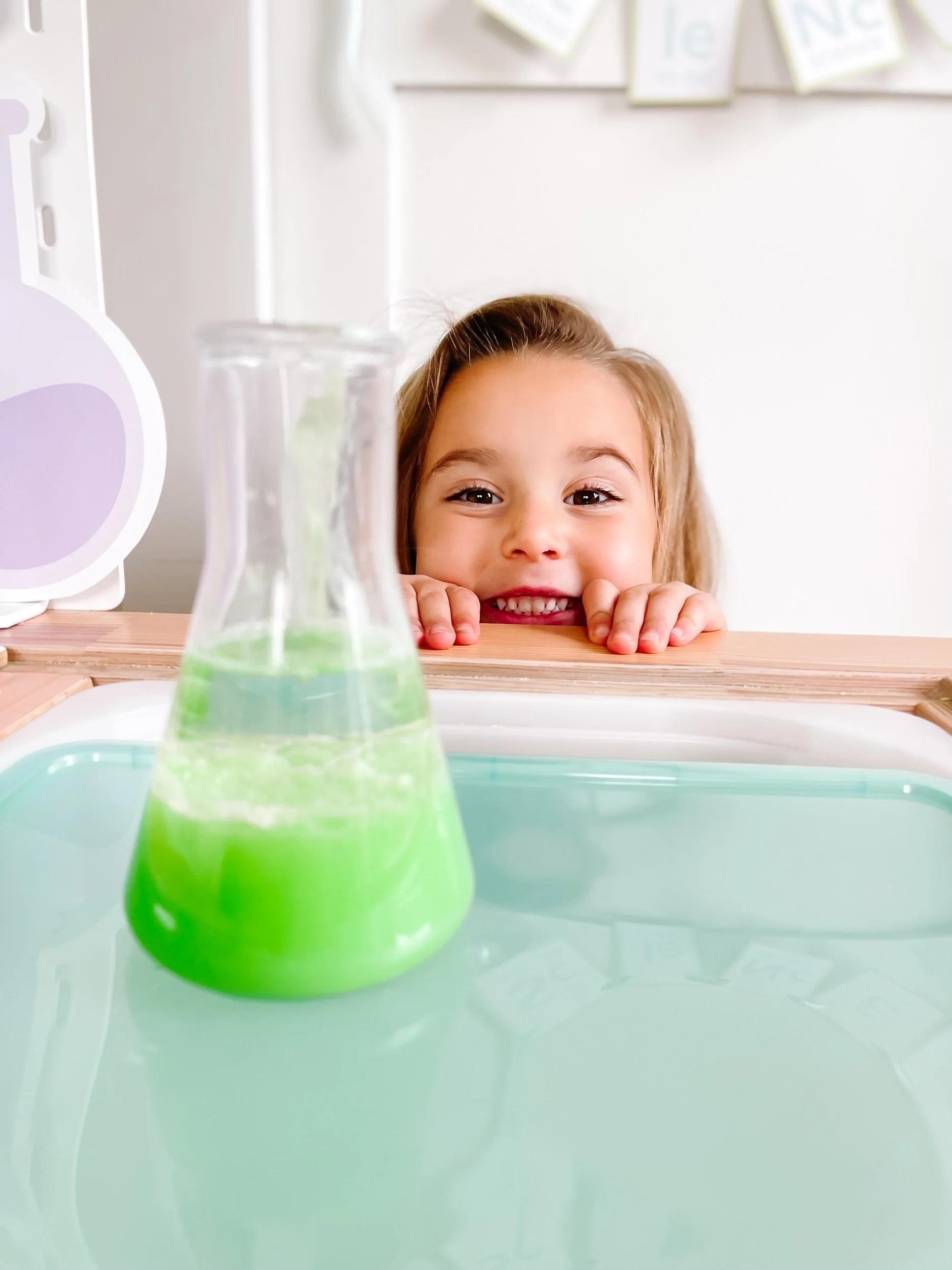
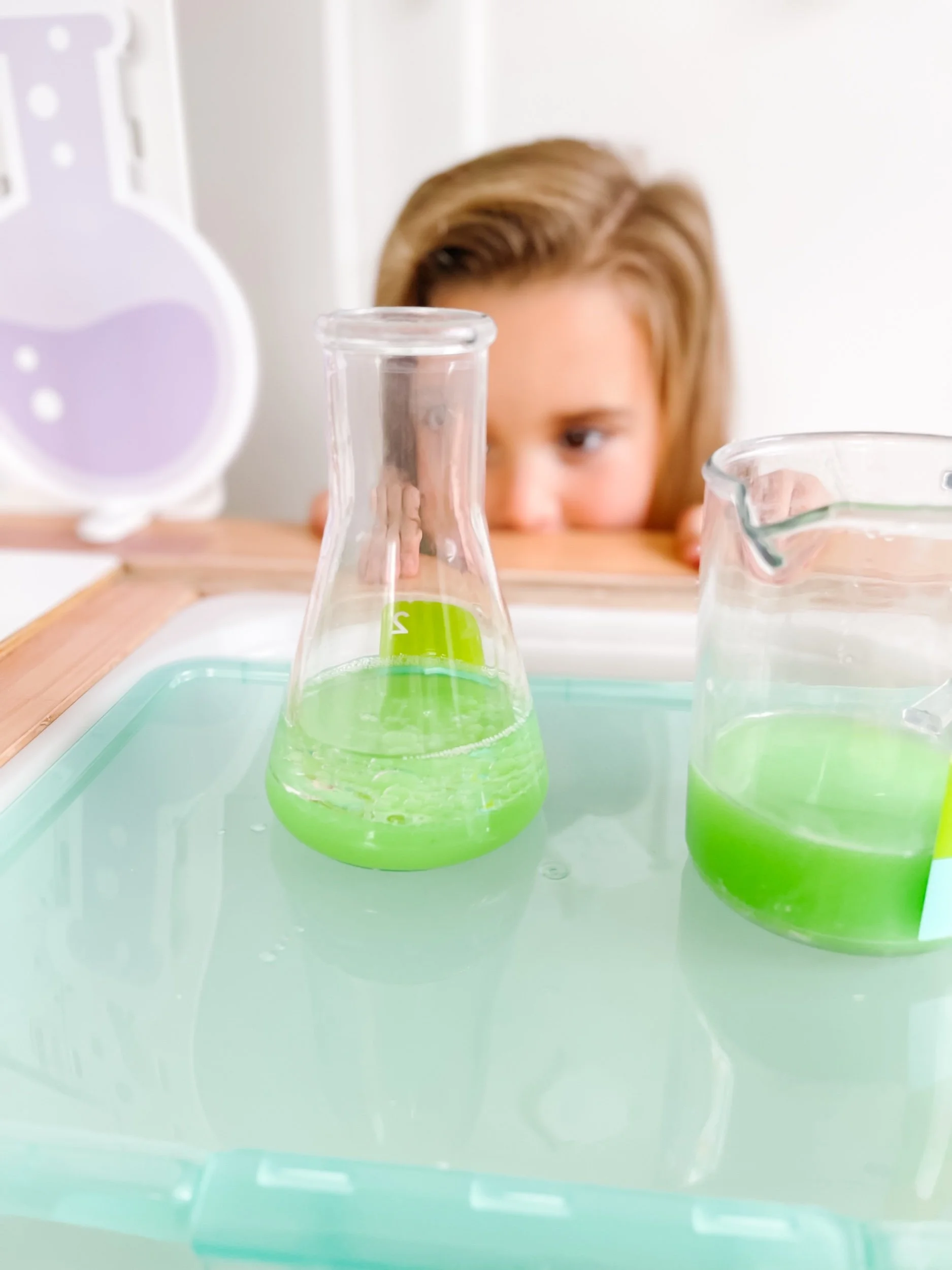
Start with a clean container. Mix blue and yellow water to create green.
Step 5: Mix red and blue
Mix red and blue water to create purple.
Step 6: Experiment freely
Let children try different proportions of the colors. Compare what happens when one color is used more heavily than another.
Skills hiding inside the play
Color recognition
Identify red, yellow, blue, orange, green, and purple.
Science
Observe how combining materials creates a visible change.
Prediction
Guess the result before mixing.
Fine motor
Pouring and transferring strengthen hand-eye coordination and control.
Early math
Compare amounts using concepts such as more, less, full, and empty.
Vocabulary
- primary color
- secondary color
- mix
- pour
- predict
- observe
- experiment
Conversation starters
What colors do you see?
What do you think red and yellow will make?
Which two colors made green?
What happens if we add more blue?
Can you make a lighter or darker version?
What changed after we mixed the water?