Goodnight Fox
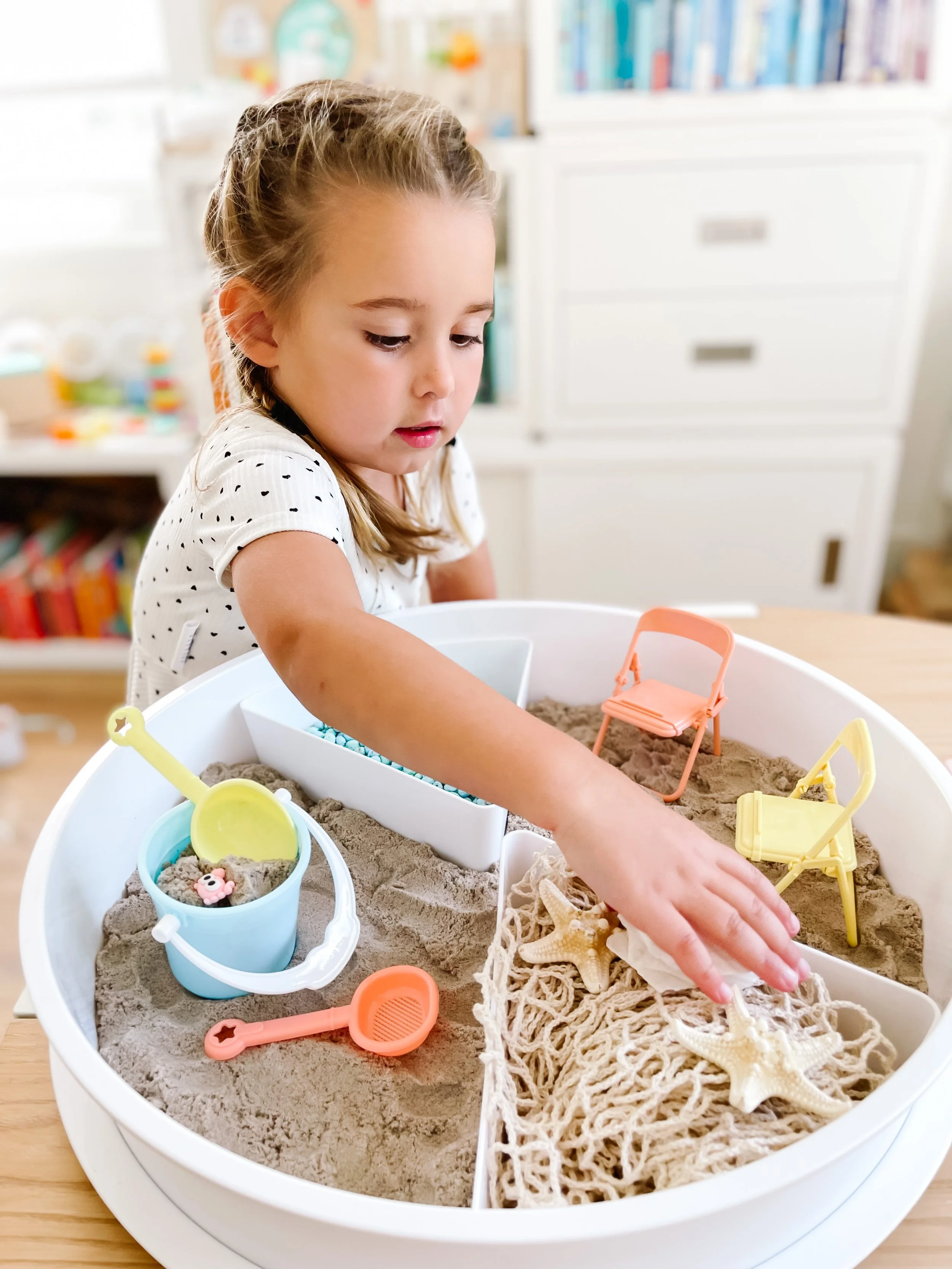
Create a small-world ocean and beach sensory bin with sand textures, shells, ocean animal cards or figures, and scoops for hands-on exploration and storytelling.
Every angle, before you read a single instruction.
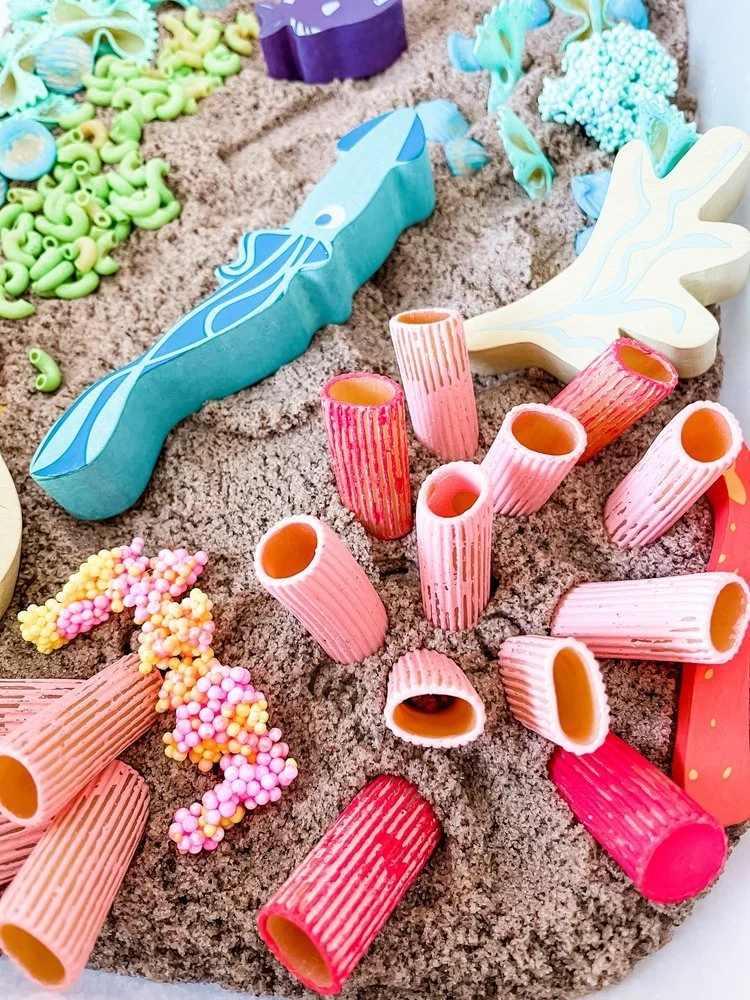
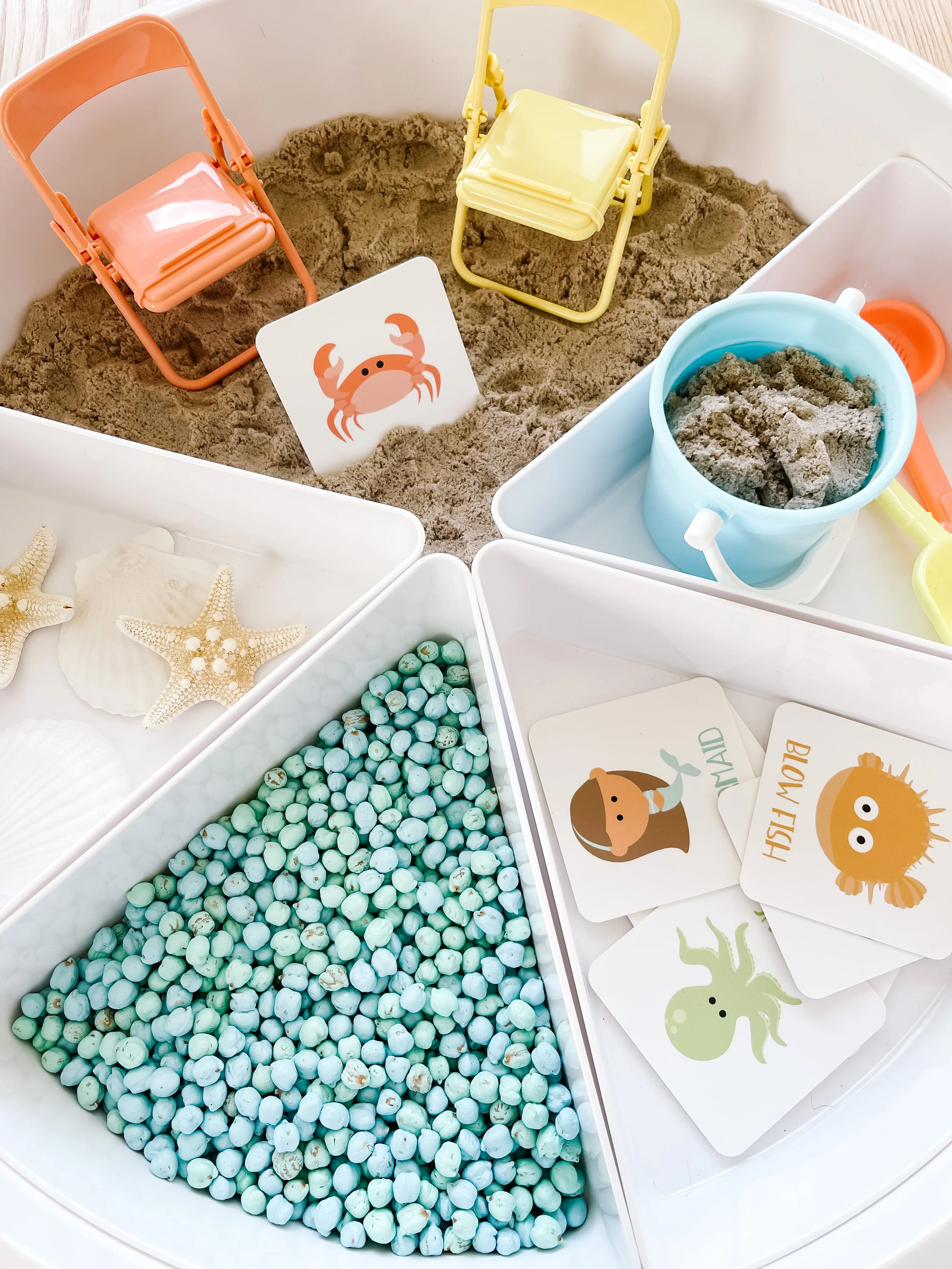
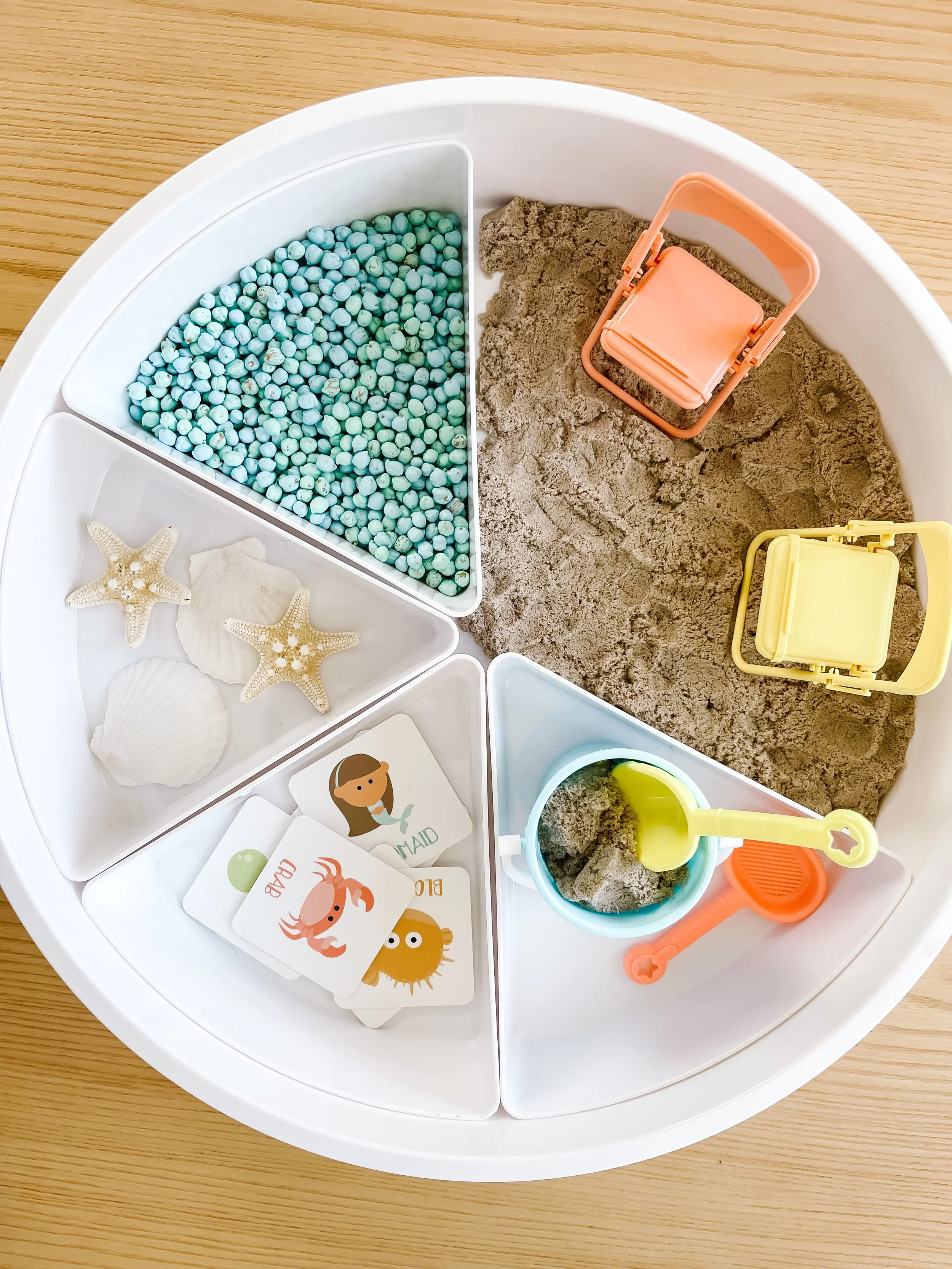
Bring a little shoreline to the sensory table with a sandy beach area, an ocean-themed texture area, shells and sea-animal cards or figures. The photographed GoodnightFox setup brings these materials together in separate trays for exploring and small-world play. Children can scoop and move the beach textures, discover shells, match sea animals to cards and create stories about life along the shore. Choose materials to suit your child's stage of development; the photos do not establish the exact ingredients of every sensory filler.
Everything for this setup, in one list.
Choose for your child's needs; do not assume the filler ingredients from a photograph.
Use a separate area or tray; the exact blue filler in the photos is not identified.
Use large, smooth pieces without sharp edges; omit small pieces for children who mouth objects.
Use age-appropriate pieces already available.
Follow along at your own pace.
Place a beach-texture material in one tray or area and an ocean-themed texture in another. Keep the amount manageable for scooping and choose fillers appropriate for your child.
Arrange suitable shells and sea-life elements around the beach and ocean areas. Check every piece for small parts and sharp edges before play.
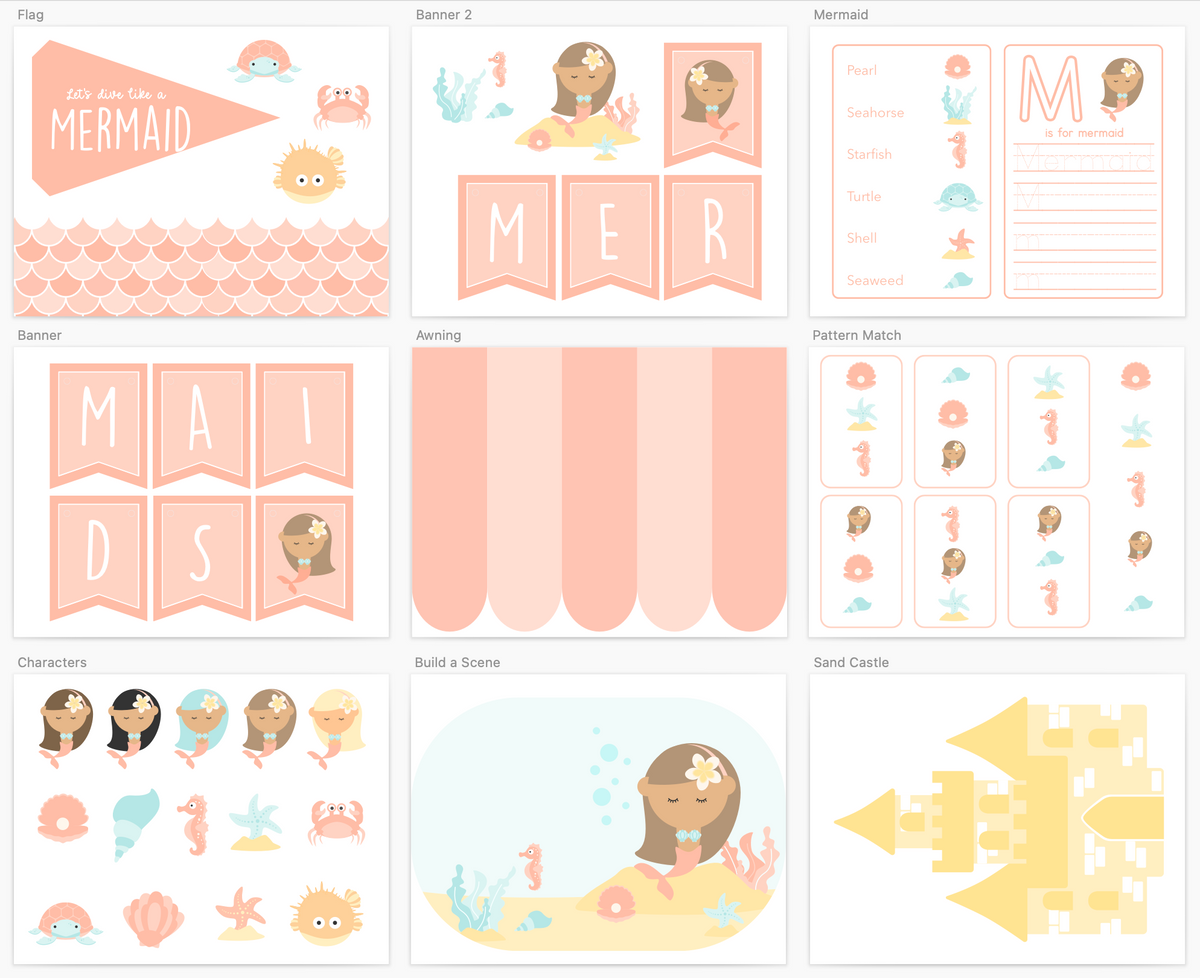
Place ocean animal cards or figures beside the scene. Invite your child to name the animals, match cards to figures or decide where each animal might live.
Offer scoops, buckets or small containers. Let your child transfer the textures, uncover shells and compare how the different materials feel and move.
Follow your child's ideas: an animal might visit the shore, hide among shells or be found by an ocean explorer. Talk about the beach, ocean and animal habitats as you play.
Gather the figures and cards, return suitable clean materials to their containers and clean the tray and hands. Discard any material that has become dirty or unsuitable for reuse.
Compare the sandy beach texture with the other ocean-themed materials without assuming what each filler is made from.
Scooping, transferring textures and moving play pieces gives little hands practice with control and coordination.
Create a miniature shoreline and tell stories about sea animals and ocean explorers.
Notice shells and sea-animal features, name the animals and talk about where they live.
How does the beach texture feel?
What do you notice about the shells?
Which animals live in the ocean?
Can you match this animal to its card?
How does each material move when you scoop it?
What is happening in your ocean story?
